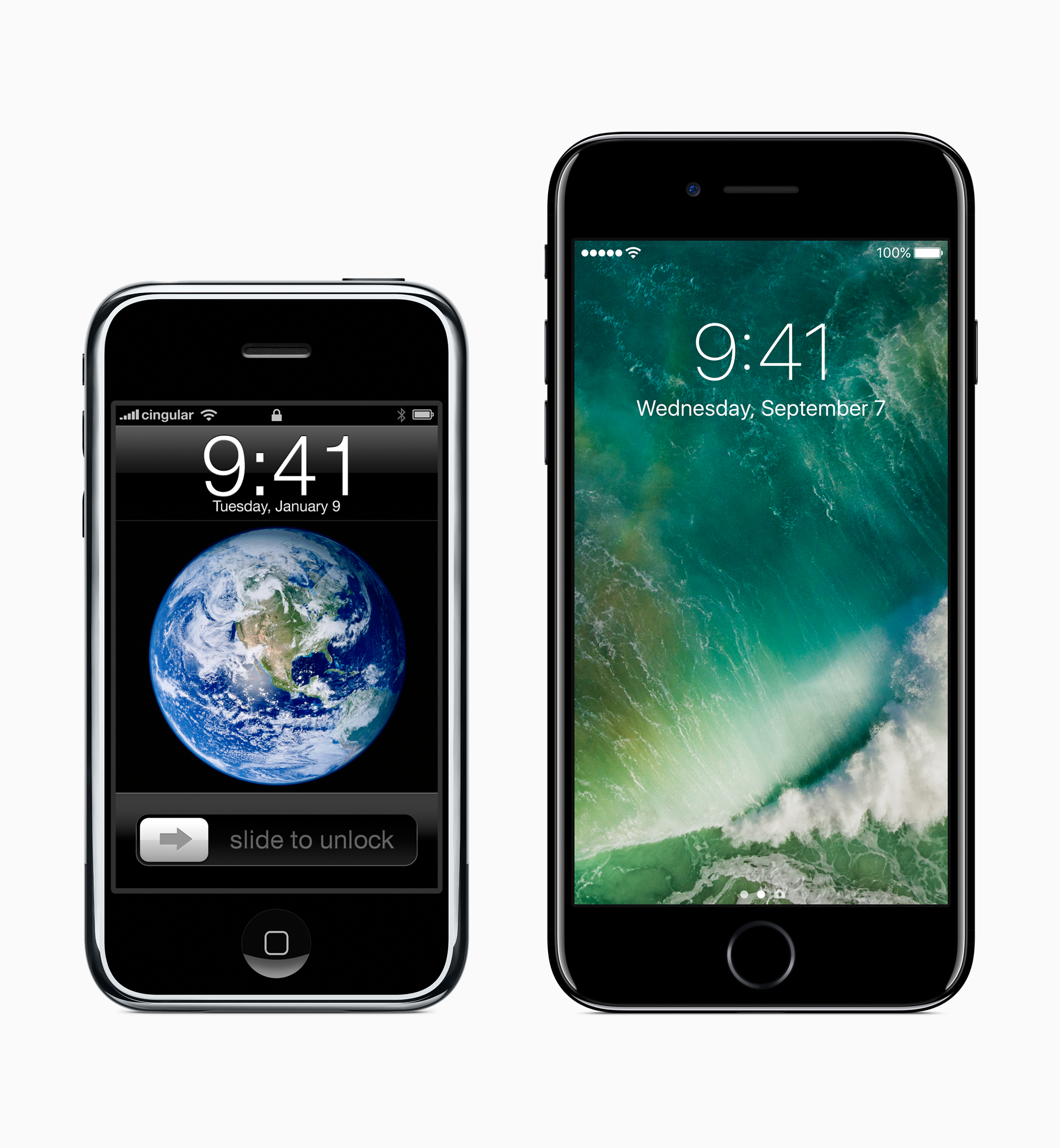
Look at the original iPhone today and the first thing you notice may be how much is missing. The face is framed by a generous border. A single button sits below the display. There is room to hold the phone without touching the screen.
Those details make it feel like an object from another period. Yet the central idea is immediately familiar: a screen that changes with the thing you are trying to do. A phone, a music player and the web could share the same surface.
The first look.
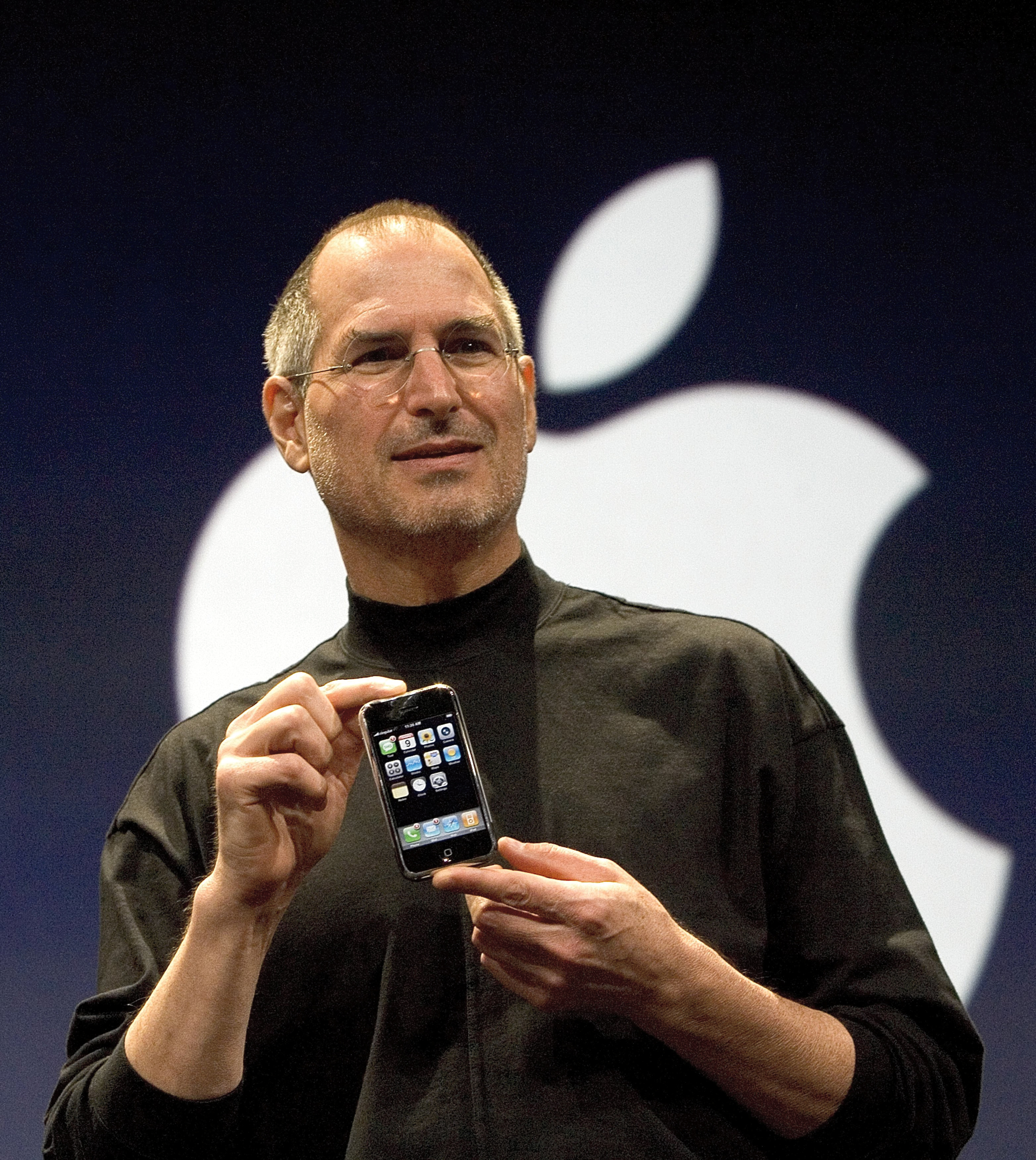
Apple introduced iPhone at Macworld in San Francisco on January 9, 2007. Its announcement centered on bringing calls, iPod functions and internet communication into one handheld device, controlled through a multi-touch display. [1]
The photograph from that day tells a quieter part of the story. A device under glass. People leaning toward it. Cameras pointed at a screen that was itself playing a film. It is a record of a first encounter, before the iPhone became an ordinary object in daily life.
One screen, three jobs.
The original announcement described a 3.5-inch display, a 2-megapixel camera, Wi-Fi and EDGE cellular data. The music experience included album artwork and Cover Flow; the internet experience included Safari, email and maps. [1]
It is tempting to read those specifications as a checklist of what the phone lacked. A historical view is more useful. The story here is the relationship between the physical object and the changing interface: music could have one set of controls, a call another, and a webpage another.
Original model file
- Introduced
- 2007
- Model number
- A1203
- Listed capacities
- 4, 8, 16 GB
The U.S. beginning.
The announcement was not the retail launch. Apple’s June 28 release specified that U.S. sales would begin on June 29, 2007, at 6 p.m. local time in its retail stores and selected AT&T stores. At launch, the 4 GB and 8 GB versions were priced at $499 and $599. [2]
That separation matters in an archive. An introduction date tells us when a product entered the public conversation. An availability date tells us when people could obtain it. A catalogue should preserve both, rather than flattening them into a single year.
Looking back without rewriting the past.
Today’s iPhones make the original feel small and simple. That contrast is interesting, but it should not turn a retrospective into a story in which the outcome was inevitable. A photograph preserves one moment. A specification describes one product. Neither tells us everything about what it was like to use or own.
This article is a sourced historical introduction, not a hands-on review. The original model is presented as an archival object, not as a recommendation for a current everyday phone. Regional compatibility, serviceability and software needs require separate checks.
The useful starting point is modest: see the object clearly, understand what was announced, and keep the dates straight. The rest of the iPhone story can follow from there.
Sources & verification
- Apple: original iPhone announcement — January 9, 2007.
- Apple: U.S. retail launch — June 28, 2007.
- Apple Support: identify your iPhone model — model A1203 and listed capacities.
Facts checked October 9, 2026. Interpretive passages are editorial commentary. Official media sources are documented in the image sources section.